
Rating – ☆☆☆☆/5
Anthony Doerr’s Pulitzer Prize-winning novel is a beautiful piece of historical fiction, allowing readers to reflect on the resilience of the human spirit through the lens of WWII.
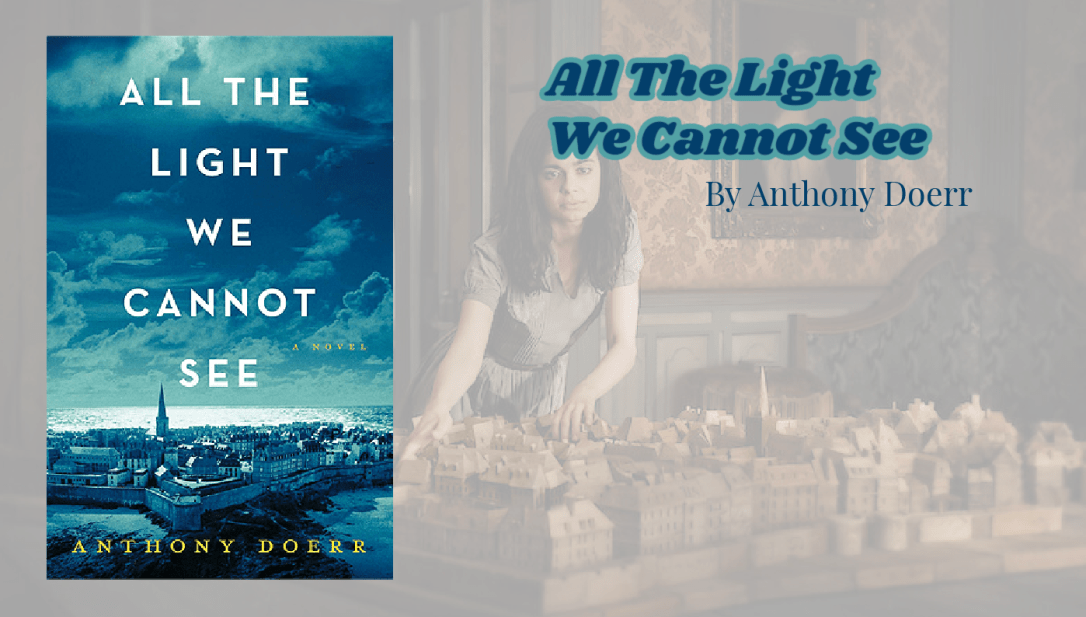
The book explores the complexities of war through the two vastly different but eventually interconnected protagonists’ stories. Marie-Laure and her father flee Nazi-occupied Paris to the Saint-Malo, staying with her great-uncle while secretly carrying a potentially priceless museum diamond. On the other side of Europe, Werner Pfennig is in a German mining town, developing a fascination with radios. He manages to improve his skills, so much that he is enlisted by the Nazis to track the French resistance.
This book is built on beautiful imagery, both literal and metaphorical. Doerr compellingly brings to life the physical world of 1940s Paris and Germany whilst also weaving in scientific and philosophical imagery. His vivid descriptions transport readers between a variety of settings, from the bustling streets of Paris to the haunting ruins of Saint-Malo. The theme of the difference between the act of seeing and not seeing is also explored through this detailed imagery. The imagery is especially developed through Marie-Laure’s moving story, as her blindness means she has to navigate the world through sound and touch.
However, the novel’s greatest strength is its harrowing perspective of childhoods shattered by war and its tender exploration of humanity amidst war. The two characters have their lives shaped by personal circumstances and conflict and by intertwining their lives, Doerr highlights the enduring power of kindness, even in the face of overwhelming odds. Doerr impressively crafts their stories to evoke profound sympathy from the readers. The novel, therefore, illuminates the extraordinary ways people cling to their humanity and extend kindness, even in the darkest of times.
Doerr’s exploration of unseen forces like light and radio waves as threads connecting individuals also adds profound depth to the story and is a recurring motif throughout. This motif is especially prevalent once you realise the true meaning of the title; that underneath the surface of history, there is light or stories that have not been seen or told. Much like the electromagnetic spectrum, where only a fraction is visible, history often hides the quiet, untold stories, emphasising both the literal and metaphorical unseen moments that shape our lives
Despite the story’s strengths, as with any novel, it has its imperfections. In my opinion, the fragmented timeline and short chapters occasionally disrupt the story’s rhythm, although they are effective at building tension. The imagery and detailed descriptions also occasionally felt dragged on, however, the beauty of the lyrical writing balanced it out. Additionally, the subplot surrounding the Sea of Flames diamond felt slightly underdeveloped, meaning its metaphorical relevance and significance were left unknown. The book was a little difficult to start as it requires patience and a willingness to get through the beginning, but you definitely get rewarded later on.
While the novel captures the inevitable horrors of war, it is the crossover of Marie-Laure’s and Werner’s lives that are the most emotional parts. The novel is a chillingly haunting war story, coming of age tale and even an exploration into the wonders of science. Doerr’s extraordinarily precise language, juxtaposes the destruction of war and conflict with the awe-inspiring nature of science and the ocean.
Ultimately, the novel highlights the lasting impact of the smallest moments in life that can turn out to be pivotal. From the magic of a distant radio broadcast to the timeless adventures found in ‘Twenty Thousand Leagues Under the Sea‘, all of these moments should remind us of the unexpected ways in which our lives can change. Overall, though, the message of the novel is that even in the darkest times, there is always the possibility of light.

 telling tales