
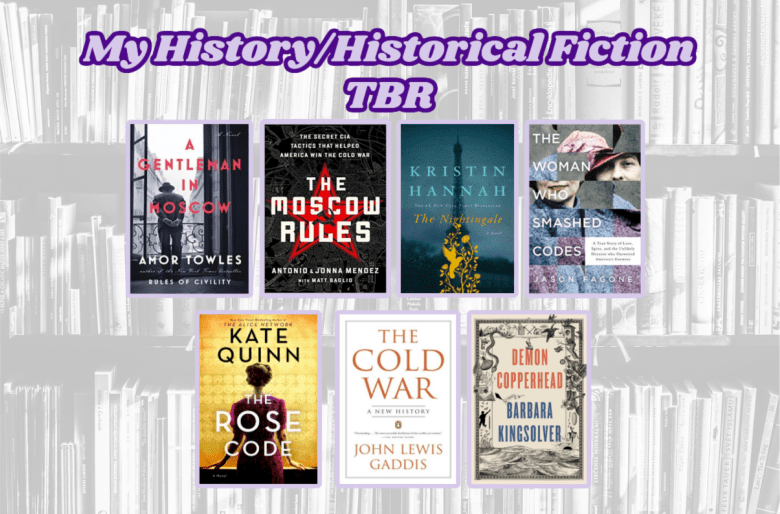
In this post I’ll be giving you a list of a few of the history/historical fiction books that I would like to read in the next few months! For every book I will also be including the goodreads summary to give you a better idea of the themes and storyline of each book.
The Nightingale, Kristin Hannah
FRANCE, 1939. In the quiet village of Carriveau, Vianne Mauriac says good-bye to her husband, Antoine, as he heads for the Front. She doesn’t believe that the Nazis will invade France…but invade they do, in droves of marching soldiers, in caravans of trucks and tanks, in planes that fill the skies and drop bombs upon the innocent. When a German captain requisitions Vianne’s home, she and her daughter must live with the enemy or lose everything. Without food or money or hope, as danger escalates all around them, she is forced to make one impossible choice after another to keep her family alive.
Vianne’s sister, Isabelle, is a rebellious eighteen-year-old, searching for purpose with all the reckless passion of youth. While thousands of Parisians march into the unknown terrors of war, she meets Gaëtan, a partisan who believes the French can fight the Nazis from within France, and she falls in love as only the young can…completely. But when he betrays her, Isabelle joins the Resistance and never looks back, risking her life time and again to save others.
The Cold War: A New History, John L Gaddis
The “dean of Cold War historians” (The New York Times) now presents the definitive account of the global confrontation that dominated the last half of the twentieth century. Drawing on newly opened archives and the reminiscences of the major players, John Lewis Gaddis explains not just what happened but why—from the months in 1945 when the U.S. and the U.S.S.R. went from alliance to antagonism to the barely averted holocaust of the Cuban Missile Crisis to the maneuvers of Nixon and Mao, Reagan and Gorbachev. Brilliant, accessible, almost Shakespearean in its drama, The Cold War stands as a triumphant summation of the era that, more than any other, shaped our own.
The Woman Who Smashed Codes, Jason Fagone
Joining the ranks of Hidden Figures and In the Garden of Beasts, the incredible true story of the greatest codebreaking duo that ever lived, an American woman and her husband who invented the modern science of cryptology together and used it to confront the evils of their time, solving puzzles that unmasked Nazi spies and helped win World War II
In 1916, at the height of World War I, brilliant Shakespeare expert Elizebeth Smith went to work for an eccentric tycoon on his estate outside Chicago. The tycoon had close ties to the U.S. government, and he soon asked Elizebeth to apply her language skills to an exciting new venture: code-breaking. There she met the man who would become her husband, groundbreaking cryptologist William Friedman.
In The Woman Who Smashed Codes, Jason Fagone chronicles the life of Elizebeth Smith who played an integral role in our nation’s history for forty years. After World War I, Smith used her talents to catch gangsters and smugglers during Prohibition, then accepted a covert mission to discover and expose Nazi spy rings that were spreading like wildfire across South America, advancing ever closer to the United States. As World War II raged, Elizebeth fought a highly classified battle of wits against Hitler’s Reich, cracking multiple versions of the Enigma machine used by German spies. Meanwhile, inside an Army vault in Washington, William worked furiously to break Purple, the Japanese version of Enigma–and eventually succeeded, at a terrible cost to his personal life. Fagone unveils America’s code-breaking history through the prism of Smith’s life, bringing into focus the unforgettable events and colourful personalities that would help shape modern intelligence.
Demon Copperhead, Barbara Kingsolver
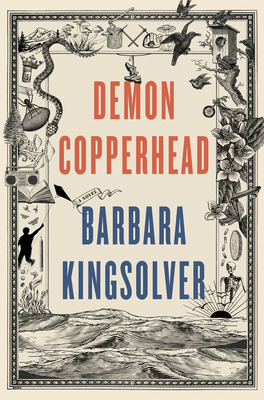
“Anyone will tell you the born of this world are marked from the get-out, win or lose.”
Set in the mountains of southern Appalachia, this is the story of a boy born to a teenaged single mother in a single-wide trailer, with no assets beyond his dead father’s good looks and copper-colored hair, a caustic wit, and a fierce talent for survival. In a plot that never pauses for breath, relayed in his own unsparing voice, he braves the modern perils of foster care, child labor, derelict schools, athletic success, addiction, disastrous loves, and crushing losses. Through all of it, he reckons with his own invisibility in a popular culture where even the superheroes have abandoned rural people in favor of cities.
Many generations ago, Charles Dickens wrote David Copperfield from his experience as a survivor of institutional poverty and its damages to children in his society. Those problems have yet to be solved in ours. Dickens is not a prerequisite for readers of this novel, but he provided its inspiration. In transposing a Victorian epic novel to the contemporary American South, Barbara Kingsolver enlists Dickens’ anger and compassion, and above all, his faith in the transformative powers of a good story. Demon Copperhead speaks for a new generation of lost boys, and all those born into beautiful, cursed places they can’t imagine leaving behind.
A Gentleman in Moscow, Amor Towles
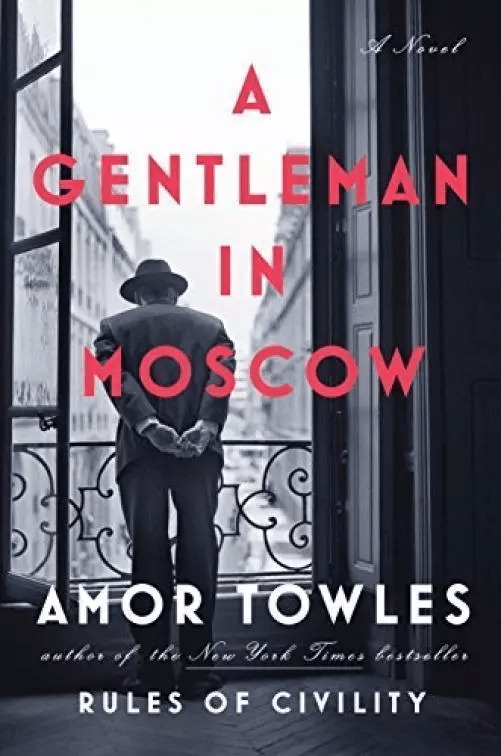
In 1922, Count Alexander Rostov is deemed an unrepentant aristocrat by a Bolshevik tribunal, and is sentenced to house arrest in the Metropol, a grand hotel across the street from the Kremlin. Rostov, an indomitable man of erudition and wit, has never worked a day in his life, and must now live in an attic room while some of the most tumultuous decades in Russian history are unfolding outside the hotel’s doors. Unexpectedly, his reduced circumstances provide him entry into a much larger world of emotional discovery.
Brimming with humor, a glittering cast of characters, and one beautifully rendered scene after another, this singular novel casts a spell as it relates the count’s endeavor to gain a deeper understanding of what it means to be a man of purpose.
The Moscow Rules, Antonio J. Méndez, Jonna Méndez, Matt Baglio

Antonio Mendez arrived in Moscow in 1976, at one of the most dangerous moments in the Cold War. Soviets kept files on all foreigners, studied their patterns, tapped their phones, and even planted listening devices within the US Embassy. In short, intelligence work was effectively impossible. The Soviet threat loomed larger than ever.
The Moscow Rules tells the story of the intelligence breakthrough that turned the odds in America’s favor. As Chief of Disguise and Authentication, Mendez was instrumental in creating and honing a series of tactics that allowed officers to finally get one step ahead of the KGB. These techniques included everything from elaborate, Hollywood-inspired identity swaps, to deception or evasion techniques, to more mundane document forgery. With these new guidelines in place, and with an armory of new gadgets perfected by the Office of Technical Services including miniature cameras, suitcase release body doubles, and wall repelling mechanisms, the CIA managed to gain a foothold in Moscow and pull off some of the greatest intelligence operations in the history of espionage.
As America is again confronted by the threat of Russian disinformation, the dramatic inside story of how we defeated our once-and-future enemy is as timely as ever.
The Rose Code, Kate Quinn
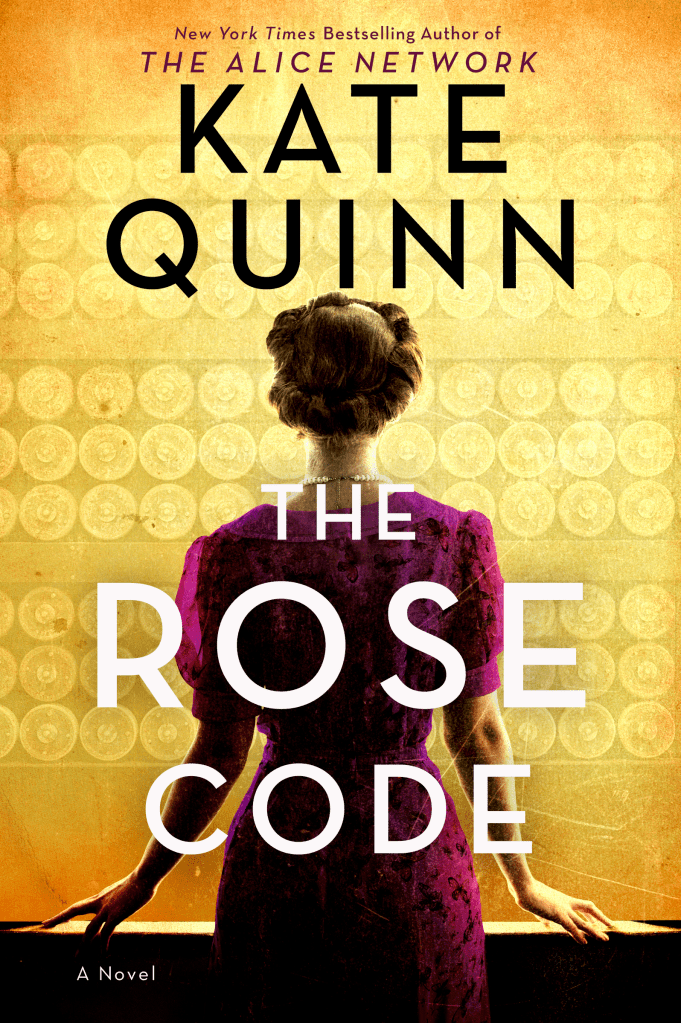
1940. As England prepares to fight the Nazis, three very different women answer the call to mysterious country estate Bletchley Park, where the best minds in Britain train to break German military codes. Vivacious debutante Osla is the girl who has everything—beauty, wealth, and the dashing Prince Philip of Greece sending her roses—but she burns to prove herself as more than a society girl, and puts her fluent German to use as a translator of decoded enemy secrets. Imperious self-made Mab, product of East-End London poverty, works the legendary code-breaking machines as she conceals old wounds and looks for a socially advantageous husband. Both Osla and Mab are quick to see the potential in local village spinster Beth, whose shyness conceals a brilliant facility with puzzles, and soon Beth spreads her wings as one of the Park’s few female cryptanalysts. But war, loss, and the impossible pressure of secrecy will tear the three apart.
1947. As the royal wedding of Princess Elizabeth and Prince Philip whips post-war Britain into a fever, three friends-turned-enemies are reunited by a mysterious encrypted letter—the key to which lies buried in the long-ago betrayal that destroyed their friendship and left one of them confined to an asylum. A mysterious traitor has emerged from the shadows of their Bletchley Park past, and now Osla, Mab, and Beth must resurrect their old alliance and crack one last code together. But each petal they remove from the rose code brings danger—and their true enemy…

 telling tales
Super, keep up the brilliant work. – Tim
LikeLike