
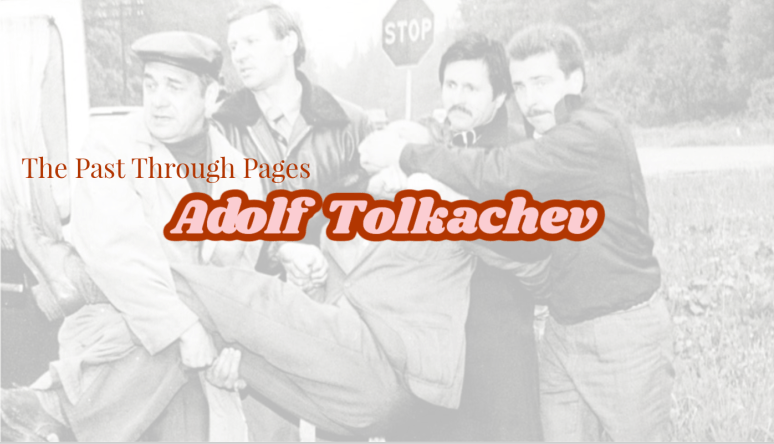
As part of this series exploring 20th century history, with a focus on espionage, I have decided to explore the story of Adolf Tolkachev. He was one of the most important CIA assets during the Cold War, and like my previous posts, I have also read a book to guide my research, “The Billion Dollar Spy” by David E. Hoffman.
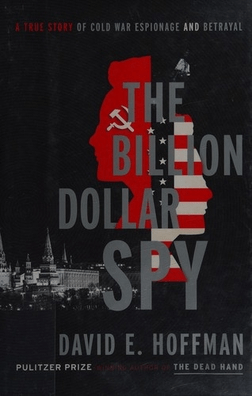
‘The Billion Dollar Spy’, David E. Hoffman (⭐️⭐️⭐️⭐️/5)
This book was captivating and comprehensive as Hoffman uses declassified documents and interviews with retired CIA officials to piece together Tolkachev’s story. We follow him from the first contact to execution, giving a vast and detailed picture of his work. It’s thrilling because it is a spy novel, but it is also emotionally complex through Hoffman’s exploration into Tolkachev’s fears and frustrations. Therefore, the book made me reflect on the price of betrayal, not only in terms of national security, but on a personal level for the spies themselves.
Background
Adolf Tolkachev was a Soviet engineer with the Scientific Research Institute for Radio Engineering (later renamed Phazotron), specialising in airborne radar systems for Soviet fighter aircraft. Although he was seemingly unassuming, Tolkachev held bitter animosity against the Soviet regime for personal losses in Stalin’s purges, and he would emerge as one of the CIA’s greatest Cold War assets.
Between 1979 and 1985, he passed on thousands of pages of Soviet classified military data to the CIA, including details about radar systems, aircraft weaponry, and Soviet capabilities that allowed the US to significantly improve their technology and defence strategies. The data he provided was so crucial that some authorities estimated it saved the US billions of dollars in research and development costs.
Motivations for betrayal
What makes Tolkachev’s story so compelling is that he wasn’t spying for money, coercion, or ideology like most spies. His treason was driven by personal grief and growing disillusionment with the Soviet government.
Tolkachev’s wife was a daughter of one of the authors who had been purged in Stalin’s regime. His family, like many others, endured periods of hardship during the Great Terror and lived in constant fear. Tolkachev became increasingly disenchanted with the government, especially when his own work was overlooked in Western research studies. He believed the Soviet system to be suffocating progress, and he desired to retaliate.
Work with the CIA
Tolkachev initially attempted to reach the CIA in 1977 by approaching a car with diplomatic plates on the road in Moscow and placing a note in it. Initially, the CIA ignored him, suspecting it was a KGB sting operation. However, he kept persisting for a year, leaving behind proposals, notes, and offers of intelligence, until the CIA eventually met with him in 1979.
After that, he became one of their most useful assets. Tolkachev was brave, photographing documents in his office and sending them over to the CIA, even when he was being tailed by the KGB.
He even brought documents out of his office during lunchtime, photographing them at home using a Pentax 35mm camera fixed to a chair. He managed to provide information regarding the MiG-29, MiG-31, and Su-27 fighter planes, and the S-300 missile system.
One of the things I thought was quite unique and interesting about this case was that Tolkachev often requested Western books, music, and consumer goods, especially for his son. He was interested in the Western way of life and asked for items such as a Queen record, an Elton John tape, and even Levi’s jeans.
The Rest is Classified: Crossing the Iron Curtain (Podcast)
If you are looking for a quicker, on-the-go insight into Tolkachev’s story, I’d highly recommend this podcast series based on David E. Hoffman’s book. It focuses on key moments in the story, offering insightful commentary. The hosts, former CIA analyst turned spy novelist David McCloskey and veteran BBC security correspondent Gordon Corera, bring lots of knowledge and reflections about Cold War espionage. I found their emphasis on one of the most unusual aspects of Tolkachev’s case, his deep fascination with Western life, interesting as it set him apart from many other Soviet dissidents.
Execution
Despite his cautious procedures, Tolkachev was ultimately betrayed. In 1985, Tolkachev was arrested by the KGB, possibly due to information passed on by a defected former CIA officer, Edward Lee Howard. Tolkachev was given a death sentence and was executed in 1986. This was a tragic end to a man who had risked everything to challenge a system he felt was oppressive.
Impact
Tolkachev’s intelligence was invaluable to the US. The US Air Force calculated that his intelligence saved the nation almost $2 billion in research and development costs. His intelligence led to significant advancements in US radar and countermeasure technologies, placing the US in a strategically advantageous position during the Cold War. His information prompted a complete redesign of a $70 million electronics package for the F-15 fighter jet, clearly showing his direct impact.
Tolkachev’s story is also unique in the history of Cold War espionage because he wasn’t recruited but volunteered. He also didn’t request money in return, but instead books and music. This could be seen as being because he wasn’t spying as a Western patriot,but because he hated the system he belonged to.
His intelligence and information shaped the defence strategy in America for many decades and gave the US its key advantage in the Cold War. However, the end of his story is also a stark reminder of the dangers and punishments that face those who betray their country, no matter what ideological justifications they have.

 telling tales